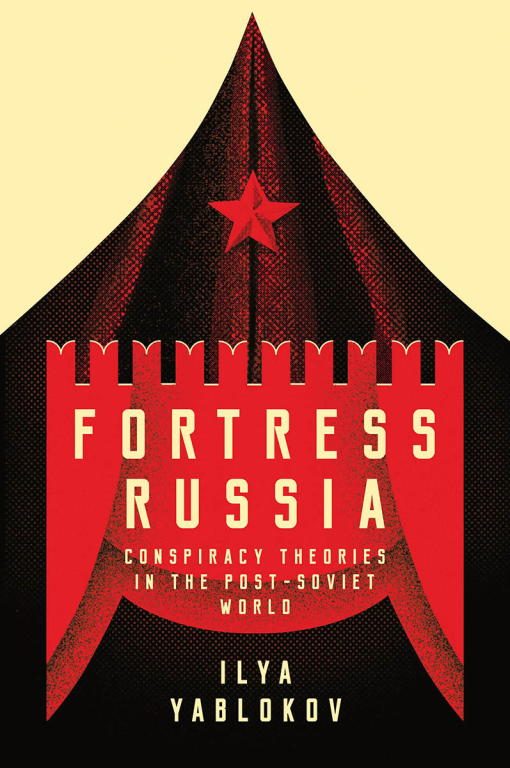
Fortress Russia: Conspiracy Theories in the Post-Soviet World
Скачать
Начало книги
The attempted coup in August 1991, and the collapse of the Soviet Union in December of that year, produced a sense of bewilderment in Russians, from top-ranking politicians down to ordinary Russians. One explanation crops up again and again: conspiracy. Understood as a malevolent plot underlying historical and current events, the conspiracy theory has become a popular tool for interpreting the social and political realities of post-Soviet Russia. Its essential element – that there is an omnipotent secret group of people plotting to increase their own power at the expense of ordinary people – is espoused by people in all walks of Russian life.
In the post-Soviet period, the West, which is very often seen by Russians as a single entity, has emerged as an essential protagonist in conspiracy discourse. However, in 2016 and 2017 the West began engaging in its own conspiracy theories. The spirit of the Cold War and the witch-hunt for Russian agents both made a comeback. Today, the Kremlin is portrayed as the global puppet master who has successfully managed to appoint a loyal man to deal with the White House. ‘Russiagate’ and the media hype which surrounds it – that is, the Kremlin’s alleged meddling in the US elections, and its attempts to influence elections in the UK and France – revived the old fear of Russian spies. Hysteria about the Russians became a central element of the US domestic political agenda, and an almost mythologized Russia became the source of many of the troubles plaguing the American people (Beauchamp, 2017). Russian hackers were found to be behind the worst cyberattacks (Calabresi, 2017); indeed, who but Russians could cause such havoc?
- Жанр
- История, Политика, Публицистика
- Год написания
- 2018
- Издание
- Polity Press, Cambridge, 2018
- ISBN
- 978-1-5095-2265-1
- Язык
- en
- Размер FB2
- 774,1 КБ
- Добавлена