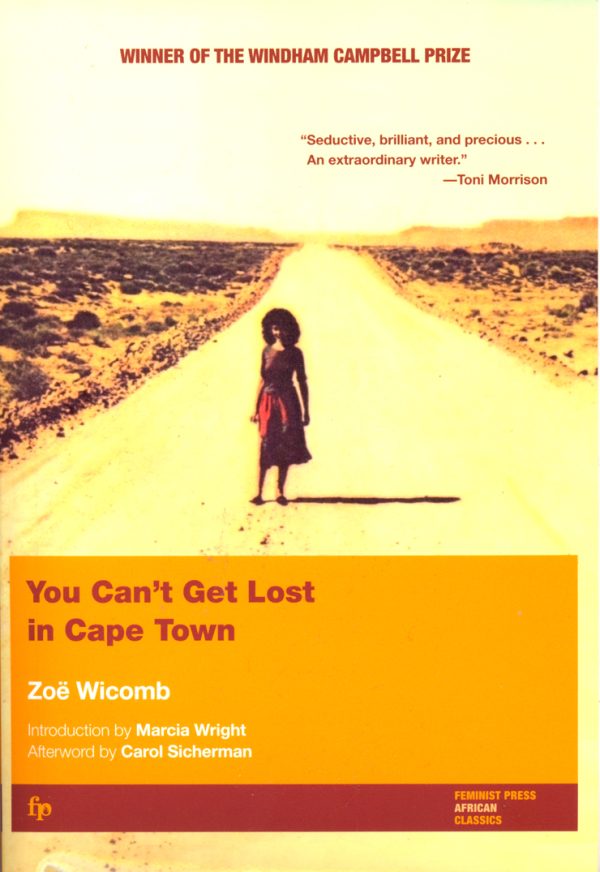
You Can't Get Lost in Cape Town
Скачать
Начало книги
Although You Can’t Get Lost in Cape Town, Zoë Wicomb’s portrait of a young coloured1 woman’s coming to age in apartheid-ruled South Africa, spans the mid-1950s to the mid-1980s, this episodic novel is not a period piece. Indeed, to grasp the complex consciousness of those known in the twentieth century as the Cape Coloured people, one must reach back not just fifty years, but to a time far anterior to apartheid. What is more, this portrayal of one young woman’s life and expanding awareness is highly relevant to the present, when the struggle in South Africa is defined not by race-led laws but rather by class aspirations and economic disadvantages that carry forward a history of vulnerability.
Wicomb’s protagonist, Frieda Shenton, and her immediate family resolutely defy easy categorization, even when the characters themselves indulge in stereotyping. The Shentons are exceptional among coloured people in Little Namaqualand, an impoverished, semiarid area beyond the rich wheat farms and vineyards north of Cape Town. With respect to their neighbors, the Shentons are well educated and, invested in social improvement, proud of their growing command of the English language and of their patrilineal name-giver, a Scot. Frieda’s father, a primary school teacher, is recognized as a local notable, above the “commonality,” while Frieda’s mother has something more equivocal in her identity: Griqua parentage.2 Mrs. Shenton has embraced the ideal of the “lady” and continually warns her daughter against compromising behavior. The young and then mature Frieda must cope with and transcend essentially conservative anxieties that feed the stereotypes purveyed by her mother, which reveal a perspective prevalent among the coloured petty bourgeoisie.
- Жанр
- Современная русская и зарубежная проза
- Издание
- The Feminist Press at CUNY, 2000
- Язык
- en
- Размер FB2
- 1,3 МБ
- Добавлена