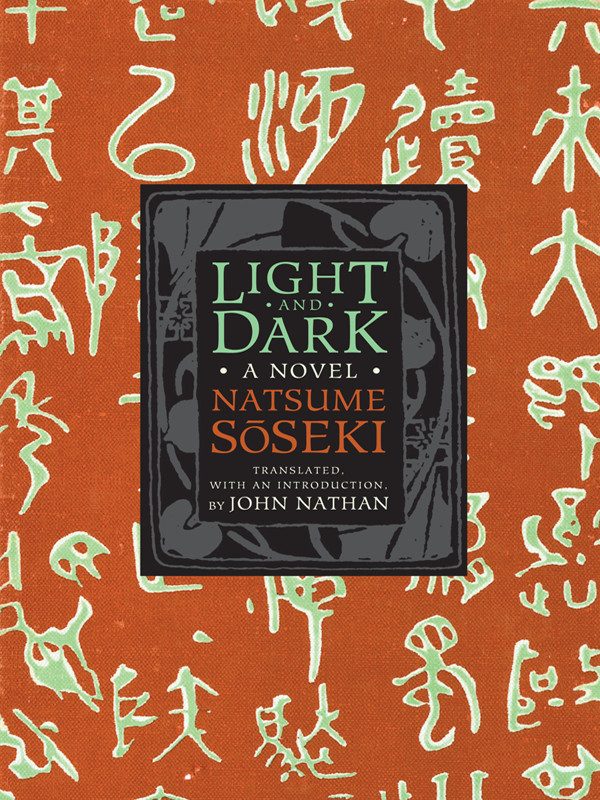
Light and dark
Скачать
Начало книги
NATSUME SŌSEKI1 (1867–1916) endured the transformation of Japan, during the span of his lifetime, from a feudal society into a modern state modeled on Western blueprints and poignantly chronicled the emotional and intellectual turmoil that accompanied it, the paralyzing cost, in his words, of “incurring” a culture from the outside.2 Between 1905 and 1916, Sōseki — in Japan he is known by his pen name alone — conveyed his bleak vision of life in thirteen novels, each one a giant step forward in his effort to elevate the fledgling Japanese novel to a level of observation that would make it “true to life” in the manner and degree of Western realism. A number of his early efforts were, as George Eliot might have said, more diagram than picture: characters are scantily revealed, and they step forward to deliver monologues that are thinly disguised lectures on themes he wants to promulgate. The narrator also intrudes didactically, delivering set speeches of his own. But book by book, Sōseki is to be observed refining the art of his fiction, merging identifiably Japanese shades of indirection and reticence with the obtrusive approaches to inquiry he adapted from the Western novel. No other writer of the Meiji period (1868–1912) was so well equipped to achieve this synthesis: steeped in the Japanese and Chinese classics, an accomplished calligrapher and brush painter and a gifted haiku poet, Sōseki was at the same time possessed of an impressive command of eighteenth- and nineteenth-century English poetry and fiction, particularly after two years in London, from 1900 to 1902, that he devoted to reading in English. His later novels are informed by his deep reading of Jane Austen, about whom he wrote at length, and of George Meredith and Henry James.
- Жанр
- Классическая проза
- Перевод
- John Nathan
- Оригинальное название
- 明暗
- Издание
- Columbia University Press, 2013
- Язык
- en
- Размер FB2
- 2,3 МБ
- Добавлена