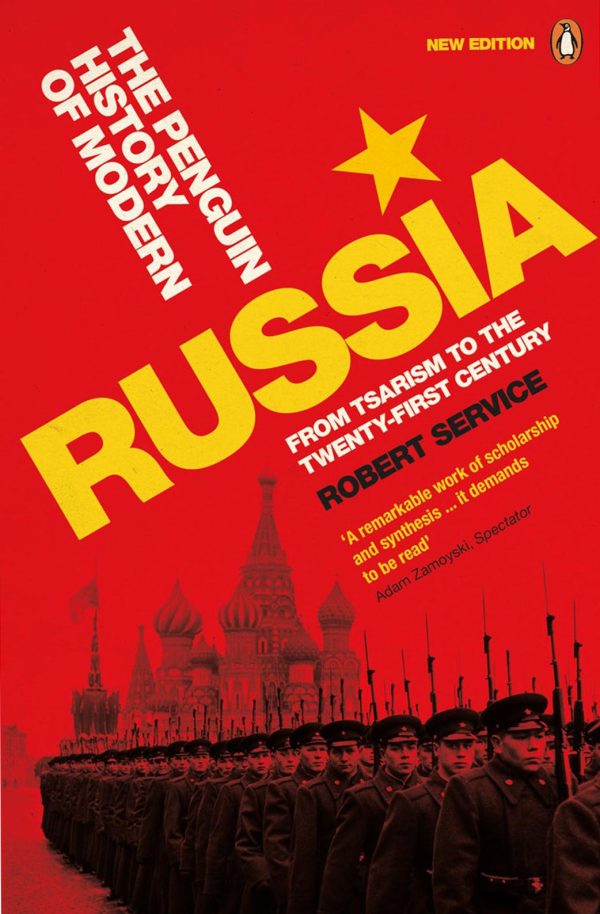
The Penguin History of Modern Russia: From Tsarism to the Twenty-First Century
Скачать
Начало книги
These differences are intended to make the text less exotic in appearance. By and large, I have kept to the Russian version of proper names. But some look so odd in English that I have Anglicized them: thus Alexander rather than Aleksandr. Finally there are several non-Russian names in the text. In the case of Polish, Hungarian and Czech leaders, for example, their names are given in their native version; and the names of Ukrainian leaders are transliterated without the simplification used for Russians. This is inconsistent, but it helps to give a sense of the variety of countries involved in Russian history. A further inconsistency lies in my use of Russian-language names for most places in the USSR: thus Kharkov, not Kharkiv. Until all of us become more accustomed to place-names according to their post-Soviet official nomenclature this seems a decent workable compromise.
The centrepiece of this history of contemporary Russia is the period of communist government. The weight of the Soviet years continues to lie heavily on the country. Before 1917 the Russian Empire was ruled by the tsars of the Romanov dynasty. Nicholas II was overthrown in the February Revolution, and the ensuing Provisional Government of liberals and socialists lasted merely a few months. Vladimir Lenin and his communist party organized the October Revolution in 1917 and established the world’s first communist state, which survived until the USSR’s abolition at the end of 1991. A new compound of politics, society, economics and culture prevailed in the intervening years. The USSR was a highly centralized, one-party dictatorship. It enforced a single official ideology; it imposed severe restrictions on national, religious and cultural self-expression. Its economy was predominantly state-owned.
- Жанр
- История
- Год написания
- 2009
- Издание
- Penguin Books, New York, 2009
- ISBN
- 978-0-14-193191-3
- Язык
- en
- Размер FB2
- 3,9 МБ
- Добавлена