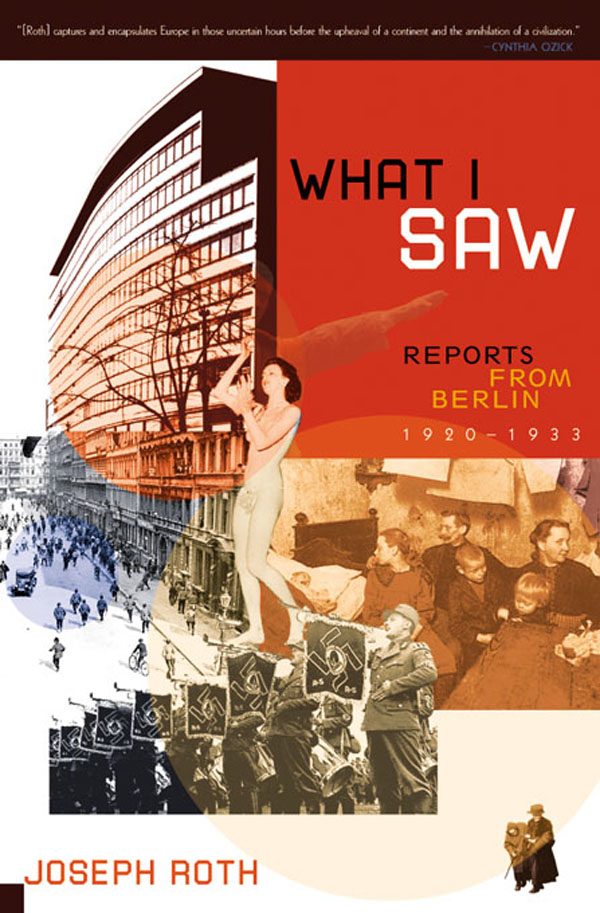
What I Saw: Reports from Berlin 1920-1933
Скачать
Начало книги
The name “Weimar Republic” has a whiff of fragility, of scandal, of doom about it. It denotes a tiny period of German history, the years from 1918 to 1933; an interval of tremulous republican government, between monarchy and dictatorship, between one catastrophic war and the approach of another; but most of all a period that was fast and febrile and fun, and — popularized by the somewhat superficial and touristic versions of Christopher Isherwood — became practically synonymous with the Jazz Age or the Roaring Twenties. Historically, though, it was a form of government and a constitution. There is some pathos and idealism in the name “Weimar,” the little statelet of Goethe and Schiller. One has to imagine the United States or Britain defeated in war, having taken enormous casualties, under part-occupation, and saddled with reparations in a punitive peace treaty that assigned them the guilt for the war, then, bethinking themselves of their finer traditions, naming their government and new constitution after a town that seemed to offer some literary precedent, as it might be “Walden” or “Stratford-on-Avon.” In the end the literary and idealistic connotations of the name did nothing. The government was established (and occasionally maintained) by force of arms. The diplomat Count Kessler wrote witheringly: “The paradox of a republican-social-democratic government allowing itself and the capitalists’ safes to be defended by hired unemployed and royalist officers, is simply too insane.” But so it went, and the Weimar period as a whole was characterized by political violence, assassinations, inflation, unemployment, crisis, and instability.
- Жанр
- Публицистика
- Перевод
- Michael Hofmann
- Оригинальное название
- Berliner Saisonbericht : unbekannte Reportagen und journalistische Arbeiten, 1920-39
- Издание
- W. W. Norton & Company, 2002
- Язык
- en
- Размер FB2
- 7,7 МБ
- Добавлена