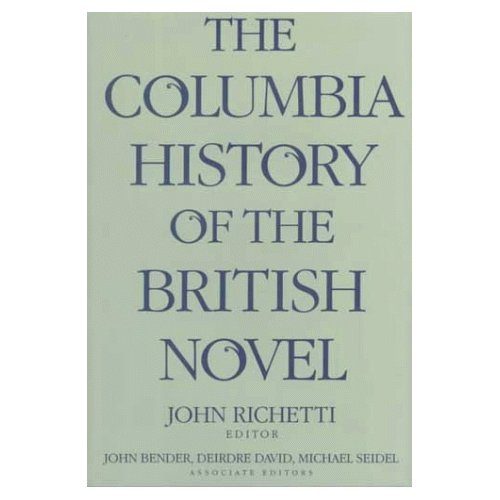
The Columbia History of the British Novel
Скачать
Начало книги
IN a memorable and ringing affirmation, D. H. Lawrence called the novel "the one bright book of life." For Lawrence the novel was much more than a literary genre; it was a means to intensely vital knowledge, far superior to science or philosophy or religion. In place of their abstract and partial views of life, the novel offered the "changing rainbow of our living relationships." But at about the same time that Lawrence was celebrating the power of the novel to give its readers the full and authentic feel of human experience, the Hungarian literary critic Georg Lukács more somberly traced its degenerative descent from classical epic. Describing the novel in gloomy and decidedly melodramatic terms as the epic of a world "abandoned by God" and as a record of modern humanity's homelessness in The Theory of the Novel: A Historico-Philosophical Essay on the Forms of Great Epic Literature (1920), Lukács looked back to the immediacy and communal integrity of ancient epic and saw the novel as the expression of what he called a dissonance in modern life whereby individuals are estranged from the external world. The novel records, he said, a profound irony at the heart of modern experience "within which things appear as isolated and yet connected, as full of value and yet totally devoid of it, as abstract fragments and as concrete autonomous life, as flowering and as decaying, as the infliction of suffering and as suffering itself." During the 1920s Lawrence saw the novel as the unique record of concrete and living experience, whereas for Lukács, writing in Central Europe during the bitter aftermath of World War — ix- World War, it was symptomatic of the ironic and contradictory confusion peculiar to modern life in the West.
- Жанр
- Культурология, Литературоведение
- Издание
- Columbia University Press, New York, 1994
- ISBN
- 0-231-07858-7
- Язык
- en
- Размер FB2
- 2,7 МБ
- Добавлена