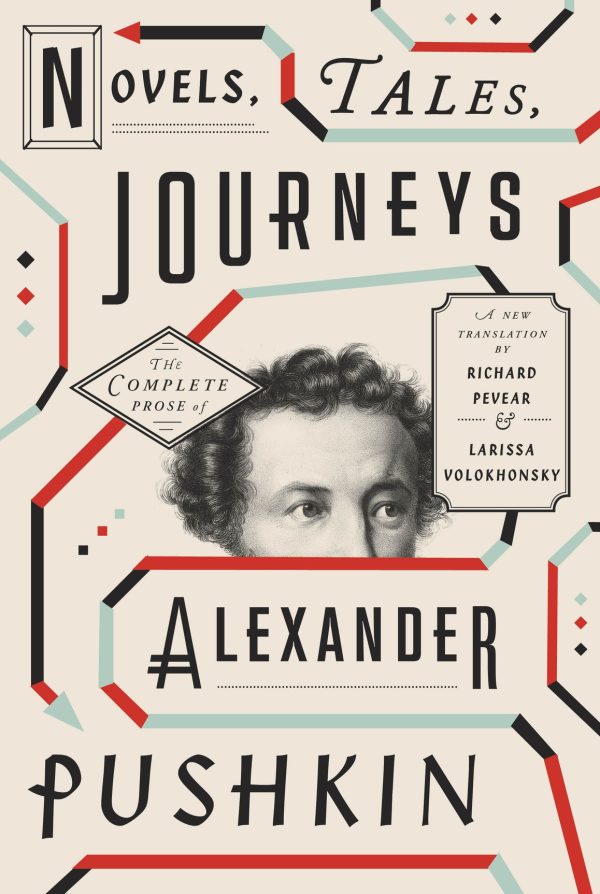
Novels, Tales, Journeys
Скачать
Начало книги
Alexander Pushkin was mortally wounded in a duel on the afternoon of January 27, 1837, at Chernaya Rechka, just outside Petersburg. “It is thus that the figure of Pushkin remains in our memory—with a pistol,” Andrei Sinyavsky wrote in Strolls with Pushkin.*1 “Little Pushkin with a big pistol. A civilian, but louder than a soldier. A general. An ace. Pushkin! Crude, but just. The first poet with his own biography—how else would you have him up and die, this first poet, who inscribed himself with blood and powder in the history of art?”
Pushkin was just thirty-seven when he died, but he had already been acknowledged as Russia’s greatest poet, a title that has since been defined and redefined but never disputed. In the decade before his death, however, he had also become the true originator of Russian prose. Sinyavsky is right to say that Pushkin lives in Russian memory as more than a writer, more than a poet—as “Pushkin!” In a speech delivered at a commemoration in revolutionary Petrograd in February 1921, the poet Alexander Blok said: “From early childhood our memory keeps the cheerful name: Pushkin. This name, this sound fills many days of our life. The grim names of emperors, generals, inventors of the tools of murder, the tormented and the tormentors of life. And beside them—this light name: Pushkin.” Yet his personal presence is in marked contrast with the essential impersonality of Pushkin’s art. It is not that he celebrated himself and sang himself: he never did.
- Жанр
- Русская классическая проза
- Издание
- Knopf Doubleday Publishing Group, 2016
- Язык
- en
- Размер FB2
- 2,1 МБ
- Добавлена