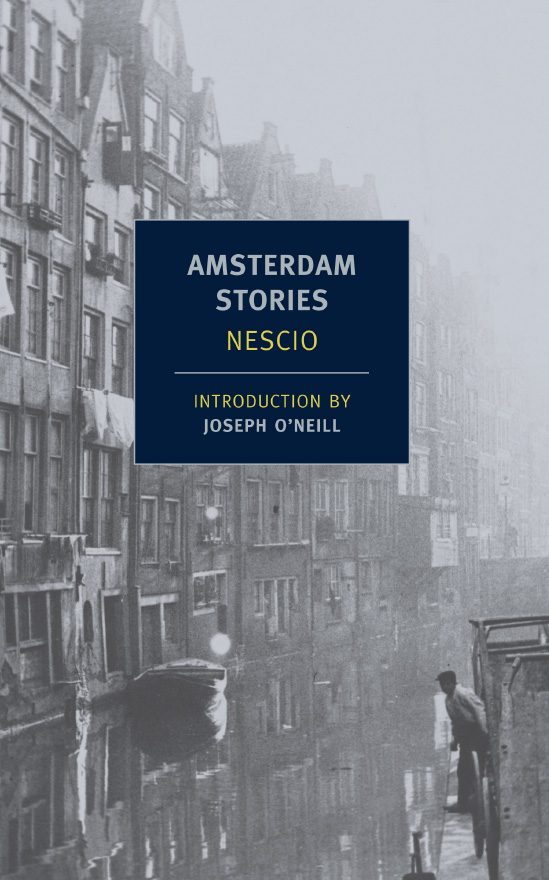
Amsterdam Stories
Серия: New York Review Books Classics
Скачать
Начало книги
It seems extraordinary that Nescio should have any reputation. He wrote very little, and he wrote small. Only four of his stories are of any length—“The Freeloader” (thirty-one pages), “Young Titans” (twenty-eight pages), “Little Poet” (forty-two pages), and “Insula Dei” (twenty-five pages). His standing becomes all the more unlikely when one considers how little time he allocated to sitting down to write. From the dates he appended to his finished work, it appears that his productive composition of fiction was limited to a handful of years scattered between 1909 and 1942, with almost nothing written in the 1920s and 1930s. How many important artists have been such slight practitioners?
Nescio’s work is highly preoccupied with the vexing, tragicomically lopsided proportions of human endeavor. Two of the above-mentioned stories use ironic diminutives, in their Dutch titles, to tenderly cut down to size their protagonists: “Dichtertje” (“Little Poet”) and “Titaantjes” (most naturally rendered, to my ear, by the Scotticism “Wee Titans”). All of Nescio’s writing is framed by the problem of a life’s smallness, and almost all of it is concerned with the grandiose struggle of young men, or men who were once young, against the compulsory dimensions of experience — metaphysical bafflement, the inseparability of desire and suffering, the demands of duty and work and social respectability. Not for nothing, in this context, is the English word plight (a bad situation) related to the Dutch word plicht (duty, obligation):
- Жанр
- Классическая проза
- Перевод
- Damion Searls
- Издание
- NYRB Classics, 2012
- Язык
- en
- Размер FB2
- 527,5 КБ
- Добавлена