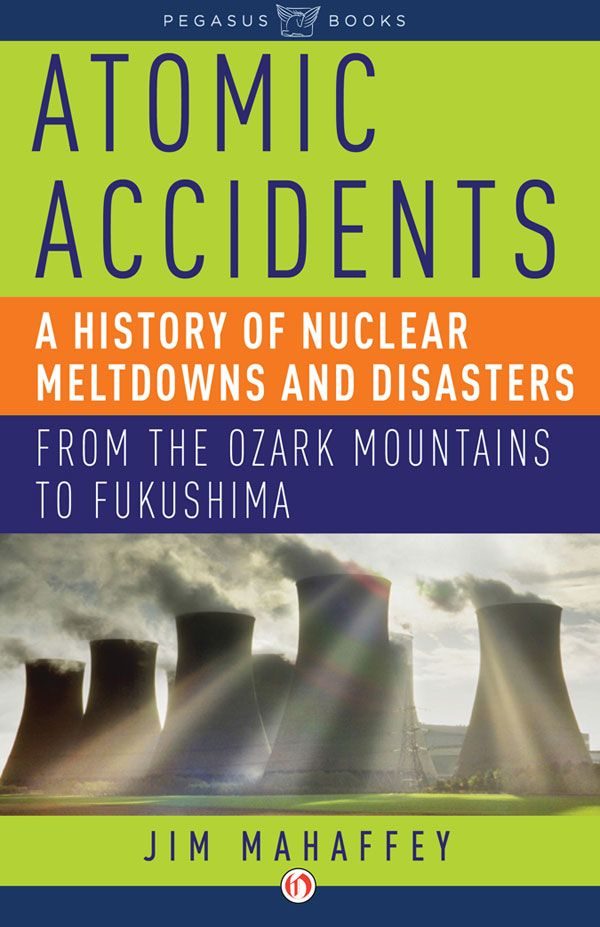
Atomic Accidents: A History of Nuclear Meltdowns and Disasters: From the Ozark Mountains to Fukushima
Скачать
Начало книги
Nuclear engineers love and admire hydroelectric power. It’s perfectly clean. It makes no smoke, no carbon monoxide, no radioactive waste, no toxic exhaust or lingering byproduct of any kind. Unlike nuclear power, it’s very simple. Dam up a river. Let the water from the top of the resulting lake fall through a pipe, gain energy, and spin a turbine. Connected directly to the turbine shaft, without any gears or transmission, is a multi-pole electrical generator. Three wires emerge from the side of the generator. Connect those to the transformer yard, and you’re sending electricity to paying customers 24 hours a day, or as long as there is water in the lake.
It is shockingly quiet on the turbine deck. The spinning machinery, usually covered with ceramic tiles made in subdued pastel colors or mounted flush with the floor, makes a high-pitched but subdued whine. The walls tremble, but only slightly, sometimes just beyond perception. The deck is spotlessly clean, and above, looking down on the machinery, is the glassed-in control room. Banks of instruments read out the status of the turbines, which is invariably good. Being a hydro-plant operator has got to be a boring job. You sit there as the generators go round and round, decade after decade, and the silt slowly builds up at the base of your dam. Excitement is when water starts to trickle down where it isn’t supposed to on the face of the dam, or a big snow-melt upstream has to be diverted over the spillway, but aside from that it’s fairly dull. If all the electrical power could be generated with hydro dams, then the world would be a cleaner, calmer place.
- Жанр
- Документальная литература
- Издание
- Pegasus Books, New York, 2014
- ISBN
- 9781605984926
- Язык
- en
- Размер FB2
- 4,6 МБ
- Добавлена