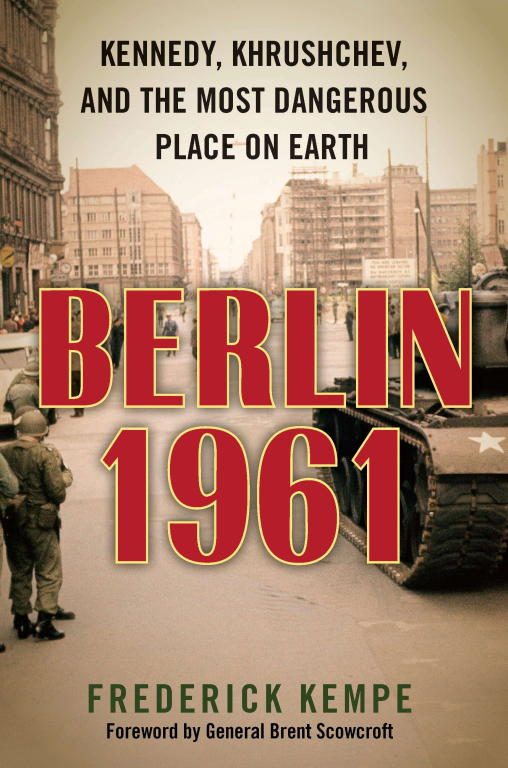
Berlin 1961: Kennedy, Khrushchev, and the Most Dangerous Place on Earth
Скачать
Начало книги
There had not been a more perilous moment in the Cold War.
Undaunted by the damp, dangerous night, Berliners gathered on the narrow side streets opening up onto Checkpoint Charlie. The next morning’s newspapers would estimate their numbers at about five hundred, a considerable crowd considering that they might have been witnesses to the first shots of a thermonuclear war. After six days of escalating tensions, American M48 Patton and Soviet T-54 tanks were facing off just a stone’s throw from one another—ten on each side, with roughly two dozen more in nearby reserve.
Armed with only umbrellas and hooded jackets against the drizzle, the crowd pushed forward to find the best vantage points toward the front of Friedrichstrasse, Mauerstrasse, and Zimmerstrasse, the three streets whose junction was Berlin’s primary East–West crossing point for Allied military and civilian vehicles and pedestrians. Some of them stood on rooftops. Others, including a gaggle of news photographers and reporters, leaned out of windows from low-rise buildings still shell-pocked from wartime bombings.