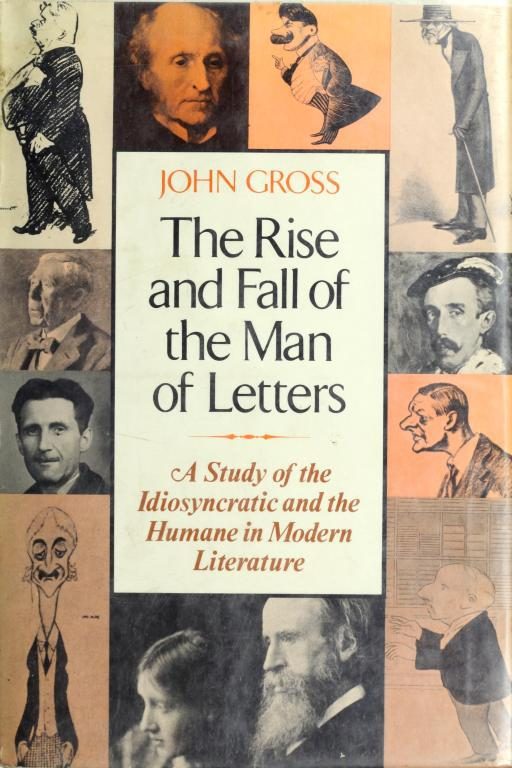
The Rise and Fall of the Man of Letters: A Study of the Idiosyncratic and the Humane in Modern Literature
Скачать
Начало книги
In 1831, writing – not without a sense of irony – in the Edinburgh Review, Thomas Carlyle instanced the growth of reviewing as a characteristic symptom of unhealthy modern self-consciousness, one more sign of the vertiginous times:
Complaints about the parasite-proliferation of criticism were nothing new: seventy years earlier, Goldsmith had compared the literary world of his day to a Persian army, in which the men who actually did the fighting were heavily outnumbered by slaves, camp-followers and hangers-on. With the rise of the professional author came the rise of the professional critic. The first successful reviews, the Monthly and the Critical, were both established in the reign of George II, and by the end of the eighteenth century other competitors had taken the field. At their worst these periodicals were little more than thinly-disguised publishers’ catalogues, at their best they carried competent, respectable, even original work. (Quite apart from its Toryism, Dr Johnson preferred the Critical to the Monthly because its contributors, though they often only skimmed the books which they wrote about, knew how to ‘lay hold of a topic, and write chiefly from their own minds’. The Monthly Reviewers were ‘duller men, and glad to read the books through’.) Despite the pioneers, however, it was only at the beginning of the nineteenth century that the review emerged as a really powerful institution, a major social force. The ground may have been laid earlier, but no one has ever doubted that essentially the revolution which Carlyle describes dates from the launching of the Edinburgh Review in 1802.
- Жанр
- Критика, Литературоведение
- Издание
- The Macmillan Company, New York, 1969
- Язык
- en
- Размер FB2
- 2,0 МБ
- Добавлена