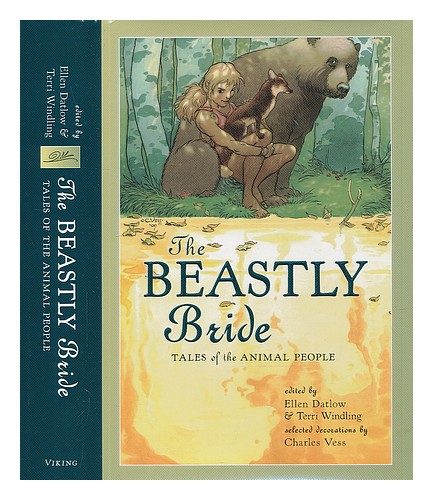
The Beastly Bride
Серия: Anthology, книга 2010
Скачать
Начало книги
Werewolves, vampire bats, fox demons, the Animagi in the Harry Potter books, and Beast Boy/Changeling in the Teen Titans comics. What do all these characters have in common? They are shape-shifters. More specifically, they are therianthropic figures, capable of transforming between human and animal shape. And as such, they are part of a mythic tradition as old as storytelling itself.
Although the werewolf is undoubtedly the best-known human-to-animal shape-shifter in popular culture today, when we turn to world mythology we find that transformation legends are attached to almost every kind of animal — as well as to a wide variety of birds, fish, reptiles, and even insects. Shape-shifting can be voluntary, as in the many stories of witches who turn into hares, owls, or turkeys (yes, turkeys!). Or it can be involuntary, like the men in The Odyssey who are turned into swine by Circe. In some mythic traditions, the Animal People (with human and animal characteristics intermingled) were the first inhabitants of the earth, from whom all two-legged and four-legged beings have descended. In other traditions, only certain special people can claim such mixed-blood ancestry — Siberian shamans descended from swans, for example, or Irish wisewomen with seal blood in their veins, or Malaysian animist priests who honor the tiger as their ancestral spirit. The therianthropic tales of myth can thus be divided into three (overlapping) strains: stories of gods, men, and supernatural creatures who shape-shift between animal and human forms; stories of those who have been transformed from one state to another against their will; and stories of animal-human hybrids whose bodies and natures reflect both worlds.