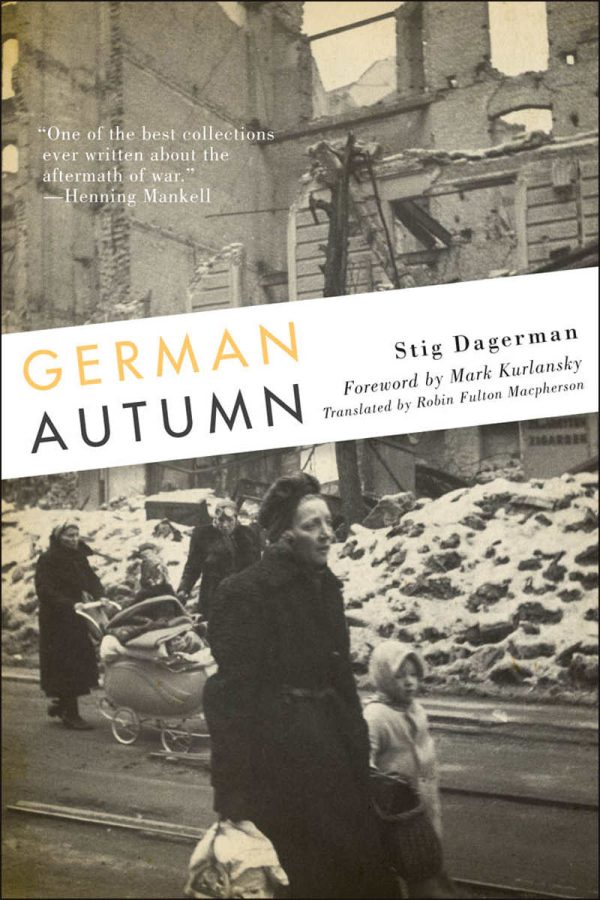
German Autumn
Скачать
Начало книги
In his study of Stig Dagerman (1958) Olof Lagercrantz quotes from a letter Dagerman wrote from Munich to his friend and colleague Werner Aspenström:
A journalist I have not yet become, and it doesn’t look as if I’ll ever be one. I have no wish to acquire all the deplorable attributes that go to make up a perfect journalist. I find it hard to understand the people I meet at the Allied Press hotel — they think that a small hunger-strike is more interesting than the hunger of multitudes. While hunger-riots are sensational, hunger itself is not sensational, and what poverty-stricken and bitter people here think becomes interesting only when poverty and bitterness break out in a catastrophe. Journalism is the art of coming too late as early as possible. I’ll never master that.
In fact Dagerman was a very effective journalist of the kind he wanted to be. When the Swedish newspaper Expressen asked him to go to Germany in the autumn of 1946 and write articles about what he saw there, he was by no means unqualified for the task: he knew the language (his first wife was German) and he had already had some journalistic and editorial experience on various papers and journals of the time (notably the Syndicalist Arbetaren). He may well have had deeper motives for seeking out people in extreme situations. We cannot tell how explicit these may have been, but I think it is mistaken to see German Autumn as marginal to his more ‘literary’ productions: the book touches on some of his basic concerns, and the process of writing it could well have proved a useful exercise in observation and realistic description.
- Жанр
- История, Публицистика
- Перевод
- Robin Fulton Macpherson
- Оригинальное название
- Tysk höst
- Издание
- Univ Of Minnesota Press, 2011
- Язык
- en
- Размер FB2
- 346,6 КБ
- Добавлена