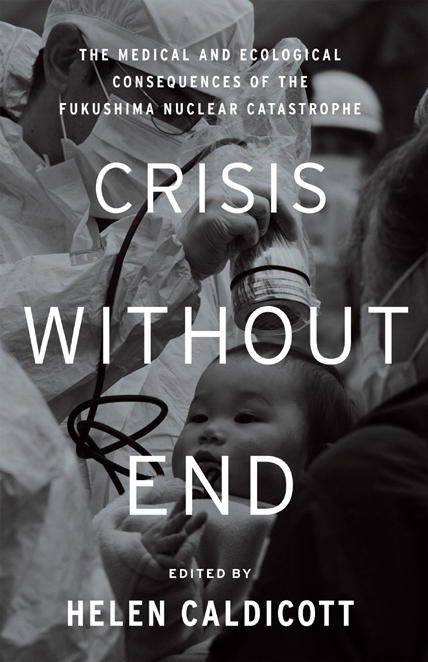
Crisis Without End: The Medical and Ecological Consequences of the Fukushima Nuclear Catastrophe
Скачать
Начало книги
On March 11, 2011, an earthquake measuring nine on the Richter scale struck off the east coast of Japan. Within days, the ensuing tsunami had induced the meltdown of three of the six nuclear reactors at the Fukushima Daiichi nuclear power plant.
During the earthquake, the external power supply was lost to the reactor complex. The pumps that circulate up to one million gallons of water per minute to cool each reactor core ceased to function. Emergency diesel generators situated below the plants kicked in, but these were soon swamped by the tsunami. Without cooling, the radioactive cores in Units 1, 2, and 3 began to melt within hours. Over the next few days, all three cores (each weighing up to one hundred tons) melted their way through six inches of steel at the bottom of their reactor vessels and oozed their way onto the concrete floor of the containment buildings—a fact that the Japanese government and Tokyo Electric Power Company (TEPCO), the power plant operator, continued to deny for months after the disaster. At the same time the zirconium cladding covering thousands of uranium fuel rods reacted with water to create hydrogen, which initiated hydrogen explosions in Units 1, 2, 3, and 4.