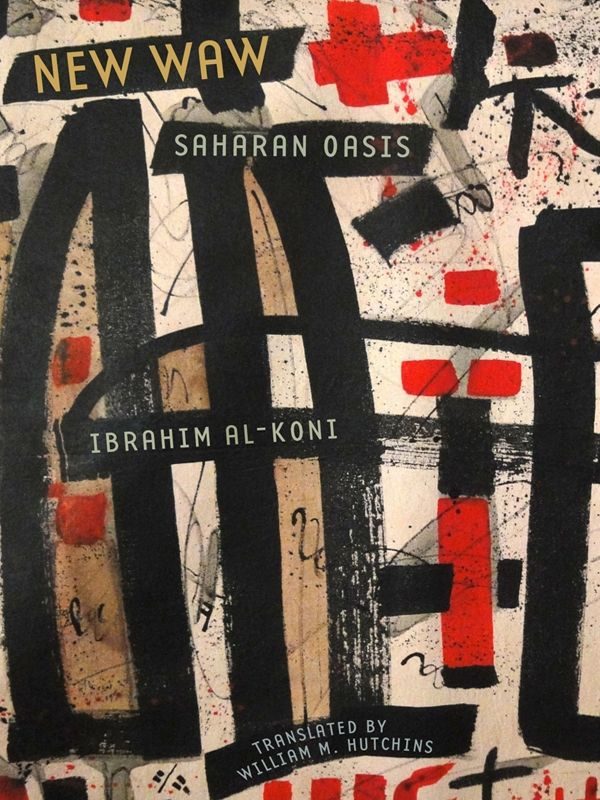
New Waw, Saharan Oasis
Серия: Modern Middle East Literature in Translation
Скачать
Начало книги
Excavator: a stranger who travels with the tribe and digs his “tent” in the belly of the earth
Imaswan Wandarran: spokesman for the Council of Nobles
Leader: a poet in love with a female poet but condemned to lead a Tuareg tribe
Lover of Stones: the tribe’s master builder
Virgin, Tomb Maiden, Temple Maiden, Priestess: the Leader’s posthumous bride and his medium
Wantahet: a figure from Tuareg folklore
In an interview with Scott Simon on National Public Radio, the Appalachian author Ron Rash said: “Landscape is very often destiny” for a writer and referred to “literature of landscape.”1 The landscape of the Sahara Desert has certainly been destiny for Ibrahim al-Koni, and his novel New Waw: Saharan Oasis contrasts the landscapes and cultures of desert nomadism with those of oasis life.
Al-Koni has written that, from the time of his descent from the high desert plateaus to start his formal schooling at twelve, he has felt a mission to speak for the desert, to help it make “its own statement, which had not yet been enunciated.” Melville had spoken for the sea, Dostoyevsky for the city, and Antoine de Saint-Exupéry had even spoken for space. “Only the desert has not yet offered its statement.” So, when he began to write in the mid 1960s, what was essential was to express the desert. At the same time, though, he points out that “Every reader of my works quickly perceives that the desert I am talking about is a metaphor for the world, an allegory for the world.”2
- Жанр
- Современная русская и зарубежная проза
- Перевод
- William M. Hutchins
- Издание
- Center for Middle Eastern Studies, University of Texas at Austin, 2015
- Язык
- en
- Размер FB2
- 483,9 КБ
- Добавлена